
Chimney Crown Repair: Prevent Water Damage to Your Cleveland-Area Chimney
A chimney is constantly exposed to rain, snow, ice, wind, and changing temperatures. At the top of the chimney, the crown provides an essential layer of protection against the elements. When the crown is solid and properly constructed, it directs water away from the chimney’s masonry. When it becomes cracked or deteriorated, water can enter the chimney and gradually cause serious damage.
For homeowners in Cleveland and throughout Cuyahoga County, chimney crown repair is particularly important. Northeast Ohio’s repeated freeze-thaw cycles can turn a small crack into a much larger problem. Addressing crown damage early can help prevent water intrusion, deteriorating mortar, loose bricks, interior leaks, and more expensive chimney masonry repairs.
What Is a Chimney Crown?
The chimney crown is the concrete or masonry surface that covers the top of a masonry chimney. It surrounds the flue opening and helps keep rain, snow, and melting ice from entering the chimney structure.
A properly built chimney crown should slope downward so water flows away from the flue. It should also extend beyond the chimney’s outer walls to help direct water away from the bricks and mortar below.
The crown is different from a chimney cap. A chimney cap typically sits over the flue opening and helps keep out rain, leaves, debris, and animals. The crown covers and protects the masonry at the top of the chimney. Both components are important, but they perform different jobs.
Why Is a Solid Chimney Crown Important?
Brick and mortar may appear completely solid, but masonry is porous and can absorb moisture. The chimney crown acts as the chimney’s first line of defense by preventing water from entering the masonry from above.
A solid chimney crown helps protect:
- Bricks and mortar joints
- Flue tiles and chimney liners
- The chimney’s interior structure
- Flashing around the base of the chimney
- Ceilings and walls near the fireplace
- The fireplace and surrounding areas inside the home
Without proper protection, water can gradually work its way into the chimney. Once that happens, the damage may extend far beyond the original crack.
How Does a Chimney Crown Become Cracked?
A cracked chimney crown can develop for several reasons. Age, weather exposure, improper construction, and the natural expansion and contraction of materials can all contribute to deterioration.
In Northeast Ohio, freeze-thaw cycles are a major concern. Water enters a small opening in the crown, freezes when temperatures fall, and expands inside the crack. When the ice melts, it can leave the crack slightly larger. As this process repeats throughout the winter, minor crown damage can become increasingly severe.
Other common causes of crown damage include:
- A flat crown that allows water to collect
- Insufficient overhang beyond the chimney walls
- Low-quality or improperly mixed materials
- Normal settling and structural movement
- Long-term exposure to rain, snow, and ice
- Previous repairs that were not completed correctly
Even a relatively small crack deserves attention because it provides an entry point for moisture.
How Water Intrusion Damages a Chimney
Water is one of the most destructive forces affecting masonry chimneys. Once it penetrates a damaged crown, it can travel into the bricks, mortar joints, flue system, and surrounding areas.
Deteriorating Mortar Joints
As mortar absorbs moisture and goes through repeated freeze-thaw cycles, it may begin to crack, crumble, or separate from the bricks. Damaged joints weaken the masonry and can eventually require chimney mortar repair or tuckpointing.
Spalling Bricks
Spalling occurs when moisture inside a brick freezes, expands, and causes the brick’s surface to crack, flake, or break away. Once spalling begins, the affected bricks become increasingly vulnerable to additional moisture.
Loose or Shifting Masonry
As bricks and mortar deteriorate, portions of the chimney may become loose or unstable. What begins as a crown problem can eventually lead to extensive chimney masonry repair.
Damage to the Flue or Chimney Liner
Water entering from above may reach the chimney’s interior and contribute to deterioration of the flue tiles, liner, or metal components. A damaged flue system can interfere with the chimney’s safe operation and should be professionally evaluated.
Interior Water Damage
A leaking chimney may leave water stains on ceilings or walls near the fireplace. Homeowners might assume that the flashing or roof is responsible, but the actual entry point may be a cracked chimney crown.
Mold, Odors, and Moisture Problems
Persistent moisture can create musty odors and conditions that encourage mold or mildew growth. Water may also mix with soot and other chimney deposits, producing unpleasant smells inside the home.
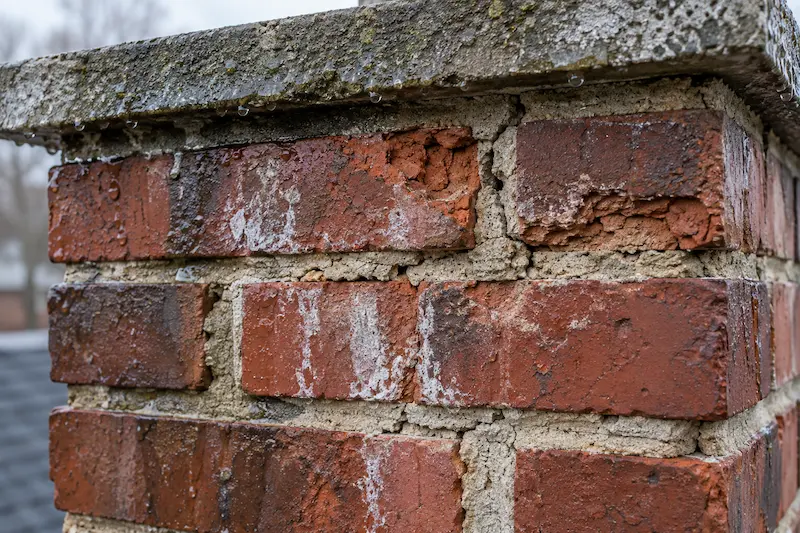
Water intrusion and freeze-thaw cycles can cause bricks to spall and mortar joints to deteriorate.
Warning Signs of Chimney Crown Damage
Crown damage is not always easy to see from the ground, but several warning signs may indicate that a professional chimney inspection is needed:
- Visible cracks across the chimney crown
- Missing or crumbling sections of the crown
- Water stains near the fireplace or chimney
- Dampness inside the firebox
- White staining on exterior masonry
- Cracked or deteriorating mortar joints
- Flaking, chipped, or loose bricks
- Rust on the damper or metal fireplace components
- Pieces of masonry around the base of the chimney
- Musty odors coming from the fireplace
White staining on the chimney, known as efflorescence, may indicate that moisture is moving through the masonry and leaving mineral deposits behind. While cleaning may improve its appearance, the source of the moisture should also be identified.
Chimney Crown Repair vs. Chimney Crown Replacement
The right solution depends on the extent of the damage.
Minor surface cracks may sometimes be sealed or repaired before water causes more extensive deterioration. Larger cracks, missing sections, poor construction, or widespread damage may require rebuilding or replacing the crown.
A professional should evaluate:
- The number and size of the cracks
- Whether water has reached the masonry below
- The crown’s slope and thickness
- Whether it extends far enough beyond the chimney walls
- The condition of the bricks and mortar
- The age and overall stability of the chimney
Applying a temporary coating over a severely deteriorated crown will not correct underlying structural problems. Proper chimney crown repair should address both the visible damage and the conditions allowing water to enter.
Can Chimney Waterproofing Help?
Chimney waterproofing can provide additional protection when it is performed correctly. A professional-grade, vapor-permeable masonry treatment can help reduce water absorption while still allowing moisture vapor inside the masonry to escape.
However, waterproofing is not a substitute for necessary repairs. Cracks in the crown, open mortar joints, damaged flashing, and deteriorated bricks should be addressed first. Sealing a damaged chimney without repairing the source of the problem may allow the deterioration to continue.
Once the chimney crown and masonry are sound, an appropriate water-repellent treatment may help protect the chimney from Northeast Ohio’s rain, snow, and freezing temperatures.
Why Early Chimney Crown Repair Matters
Chimney damage rarely corrects itself. A small opening that allows water into the crown can eventually lead to damaged mortar, spalling bricks, interior leaks, and structural deterioration.
Early repairs are generally less involved than rebuilding large sections of damaged masonry. A timely inspection can identify the source of the problem and help determine whether the chimney needs a minor crown repair, more extensive restoration, or complete chimney crown replacement.
Preventive maintenance can also help preserve the chimney’s appearance, performance, and structural integrity.
Need Chimney Crown Repair in Cuyahoga County?
If you have noticed crown cracks, loose bricks, deteriorating mortar, or signs of a leaking chimney, Riaz Chimney & Masonry can help. We provide professional chimney inspections, chimney crown repair, chimney masonry repair, tuckpointing, chimney waterproofing, and related chimney services throughout Cleveland and Cuyahoga County.
Our team will assess the condition of your chimney, identify potential sources of water intrusion, and recommend an appropriate solution. Whether your chimney needs routine maintenance or more extensive repairs, addressing the problem now can help prevent further water damage.
Contact Riaz Chimney & Masonry today to schedule an inspection or request an estimate for your Cleveland-area chimney.